
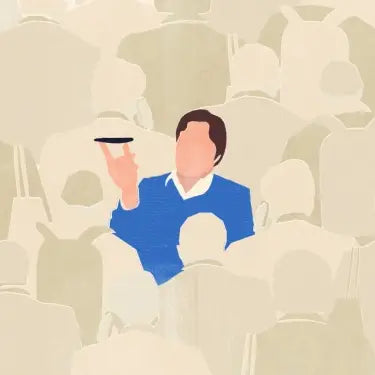

The Elevator Without a Screen
The first thing I noticed when I switched from a smartphone to my Punkt MP02 was the awkwardness in the elevator. I work on the 10th floor of a very high-traffic building on a medical campus. Every morning, I press the button and wait for the doors to slide open, then stand with strangers as we slowly move upward, stopping floor by floor to let people on and off.
Being on one of the top floors, I am often one of the last people aboard. Being last isn’t a big deal. It’s actually quite nice to have a quiet moment before the workday begins. Being second to last, though, is terrifying.

In a crowded elevator, there’s enough commotion over those few minutes that nobody seems bothered by the close quarters. Every now and then, however, there are just two of us. Within seconds, we have to decide: are we going to acknowledge that we—two strangers—are about to share a small, silent space for a moment? Or are we going to ignore each other?
At first, I missed my smartphone. I would just stare at the numbers as they slowly ticked upward. Often, the other person would relieve the awkwardness by looking at their own screen or, even better, by already having headphones in before they even arrived.
But then I began to experiment. What might a little human interaction do?
I started small: a smile, a nod in greeting as we stood waiting to get on, sometimes even a simple, “Good morning.” These gestures were politely returned. The silence still followed, but having acknowledged one another made it feel a little less awkward.
Then one day, something unexpected happened.
I was holding the book I’d been reading on the train, and a woman I didn’t know said to me as we stepped into the elevator, “Is that Crime and Punishment by Dostoyevsky? That book messed me up.”

I was surprised by how much joy that simple connection brought me.
“It is! And you’re right—I can’t read it before bed or I can’t fall asleep,” I replied.
We both laughed, and then she got off.
As I sat down at my desk that day, I felt a little more grounded, more situated in a place where we weren’t just strangers, but people with lives and experiences.
From that point on, I started greeting people each morning as we shared those brief moments in the elevator. What amazed me was how these small gestures didn’t just ease the tension — they became real connections.
This became even more evident with the people who arrived at the same time as me each day and sometimes got off on my floor. People I would never have met otherwise, but from whom I began to hear about friends and family in other countries, joyful weekend adventures, and even how people were affected by a local tornado.
Over a few months without a smartphone, this small habit began to evolve into a broader attitude. It changed how I approached people throughout the day.
A smile on the train turned into a brief but meaningful conversation with a young homeless man about starting his first job flipping burgers the next day. Asking for directions led me into a bar I had never noticed before.

When my girlfriend and I attended a wedding in New York, we navigated using a paper map. It forced us to solve problems together, but it also meant that instead of walking with our eyes fixed on a screen, we looked up — at the streets, the buildings, the architecture, and the people.
You don’t have to watch very closely to notice that New Yorkers wear and do some very interesting things.
I’m surrounded every day by people with rich, complex lives — people I don’t know, and don’t necessarily need to know — but these small greetings are signals we give one another to acknowledge our shared humanity and dignity.

Most of the time, this acknowledgment is received and returned without much thought. But it requires one simple thing: noticing each other.
Every now and then, though, you encounter someone who needs encouragement — someone who could use a moment of connection, a reminder of that shared humanity.
After a late-night run that ended around 10 PM, I found myself hungry, with all the nearby restaurants closed. I drove to another part of town, only to find that place closed as well.
As I walked back to my car, a man stopped me and asked, “Do you know this area pretty well?”
Without going into all the details, he was hungry, and so was I. We ended up sitting on a picnic bench, eating a few McDonald’s cheeseburgers together and sharing our stories.
Something he said that night has stayed with me.
Comparing his time in jail to life on the street, he said, “Sometimes I wonder if people are better to each other in there than they are out here.”
There’s a lot that can be done to address poverty in our communities, and I certainly wouldn’t suggest that everyone should be sharing late-night meals with strangers.
But it’s remarkable how much even the smallest gestures — a greeting, a smile — can affirm each other’s dignity in a world where so many people move through their day unaware of those around them.

Now, I feel a small sense of loss when I see someone step into the elevator with headphones already in. I’m grateful when I can exchange a simple “Good morning” or “Have a good day.”
And one day, I was even greeted with:
“Aren’t you the guy who was reading Crime and Punishment?”
“Yes,” I smiled. “It ends a lot better than you expect it to.”
- Samuel Gerbic


